Starting solids is an exciting milestone—and one that most parents feel at least a littlebit nervous about. Between social media, Google, your pediatrician, in-laws, fellow parent friends… there’s a lot of conflicting information out there about when to start, how to start, and what foods to offer.
I’m here to demystify this process for you!
Hi, I’m Cecelia. I’m a pediatric feeding therapist, licensed speech-language pathologist, board certified lactation consultant, and certified perinatal mental health specialist. Put simply: I help parents feed their babies and feel good doing it.
Let’s talk about how you can know whether your baby is ready to start solids!
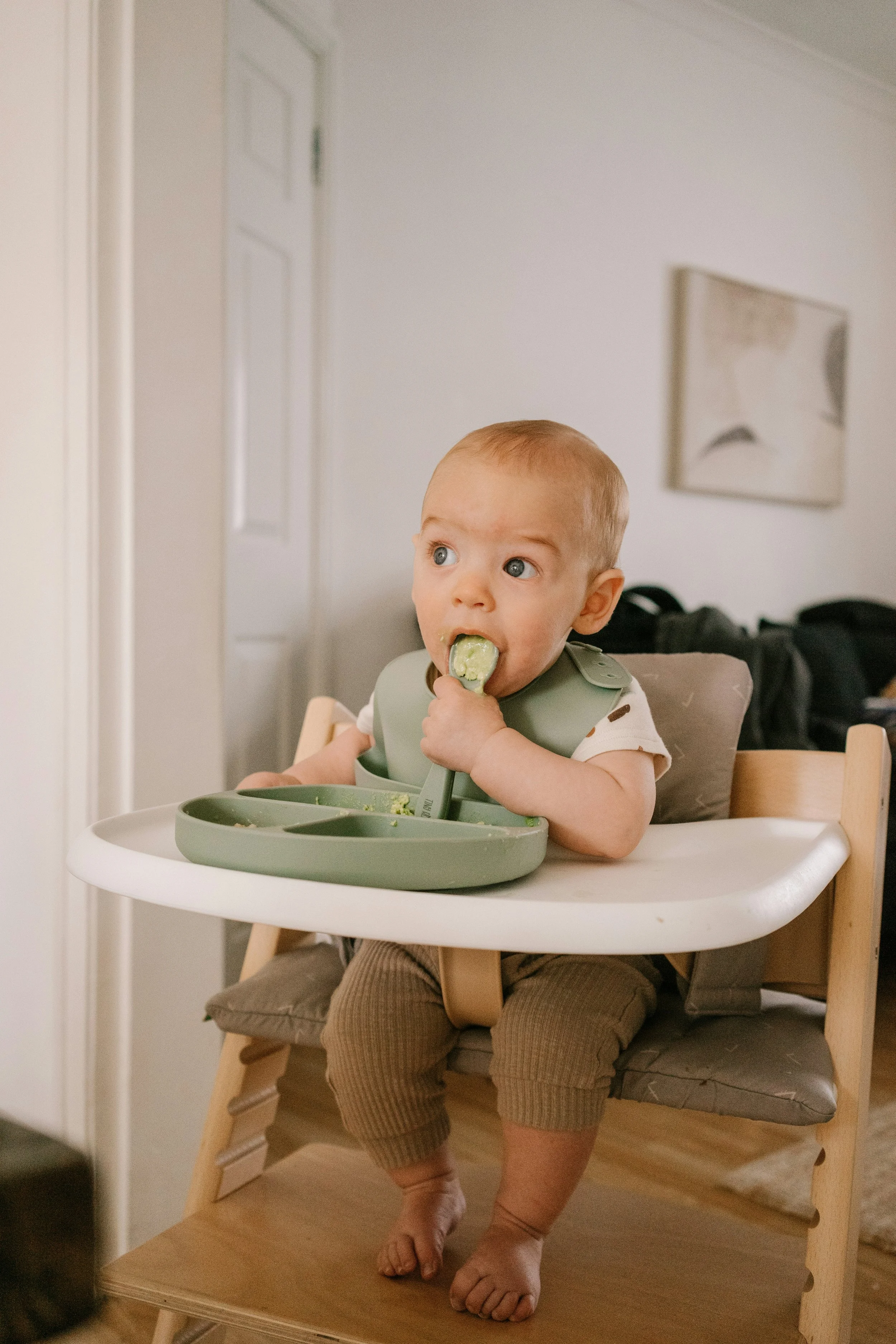
Myth #1: Some babies can start solids at 4 months old.
While this used to be a common recommendation, we know now just how harmful it is to start solids before a baby is developmentally and physiologically ready. The World Health Organization (WHO) and American Academy of Pediatrics (AAP) recommend exclusive breastfeeding for the first 6 months of life, with formula as an appropriate alternative food when breastmilk isn’t available.
Introducing solids before 6 months isn’t recommended because…
Babies have a delicate GI system, and their intestines are not prepared to digest or absorb nutrients from solid foods until they are about 6 months old.
Early introduction of solid foods can damage baby’s immature intestinal lining, causing inflammation, rashes, constipation, diarrhea, and impaired nutrient absorption.
Developmentally, babies younger than 6 months do not usually have the motor skills to sit comfortably in a highchair, chew and swallow foods safely, or use their fingers to engage with foods successfully.
Myth #2: You should wait to start solids until the tongue thrust reflex is gone.
This is another old recommendation that isn’t supported by research. The tongue thrust reflex causes your baby to push the tongue forward when something is placed in their mouth, protecting them from choking or swallowing foreign objects. This reflex can actually be protective against choking when babies are starting solids, so there’s no need to wait for it to disappear.
Myth #3: You can give a 3-5 month old baby rice cereal in the bottle to help with slow weight gain, or purees to help with constipation.
Babies under 6 months who are struggling to gain weight on breastfeeding or formula alone need to see a feeding specialist to address the root cause of their slow weight gain. Same with constipation—early introduction of purees doesn’t address the root cause, and may actually worsen gastrointestinal health.
Signs your baby may be ready to start solids
Many babies will be ready to start solids at around 6 months, but not all. Babies who were born preterm, babies with developmental delays, and even full-term healthy babies may not be ready until 9-10 months or later. Regardless of baby’s age, here are the signs of readiness to start solids:
Baby is able to sit up without flopping, falling, or hunching
Baby is reaching, grasping, and bringing items to mouth
Baby is able to hold their head up steadily
Baby is interested in food (watches you eat, reaches for your food)
Need more help with starting solids? I can help! I offer in-home feeding therapy and lactation support for little ones age 0-5 in the Vancouver, WA and Portland, OR area. Explore my services and reach out to schedule an appointment!
